Get A Quote: 0414 802 755 | Builder's License: 387501C | Email: info@aussiebathroomrenovations.com.au

Walk-In Shower vs Bathtub: Which Suits Your Sydney Home
Whether a walk-in shower or a bathtub suits your home better usually comes down to three things: whether children or future buyers with children are part of the picture, how much floor space is available, and how long your household actually spends in the shower. A water-efficient shower typically uses less water than a bath, but that's not guaranteed, an older showerhead running for ten minutes can use more water than a full bath.
Sydney homeowners often assume this decision is purely aesthetic, sleek and modern versus classic and relaxing, but the practical differences (water use, resale considerations, and how the space gets used day to day) usually matter more than the look.
Does a Walk-In Shower Use Less Water Than a Bath?
A water-efficient, WELS-rated showerhead uses around 9 litres per minute, meaning a typical 7-minute shower uses roughly 63 litres, noticeably less than a standard Australian bath, which holds around 95 to 150 litres depending on size and how full it's run. This changes with an older, non-rated showerhead, which can use 15 to 20 litres per minute, pushing a 10-minute shower to 150-200 litres, more than the bath it's being compared to.
The practical takeaway: a short shower with a modern showerhead reliably beats a bath on water use. A long shower with an old showerhead doesn't. Checking the WELS star rating on an existing or planned showerhead is a more useful comparison than assuming showers automatically win.
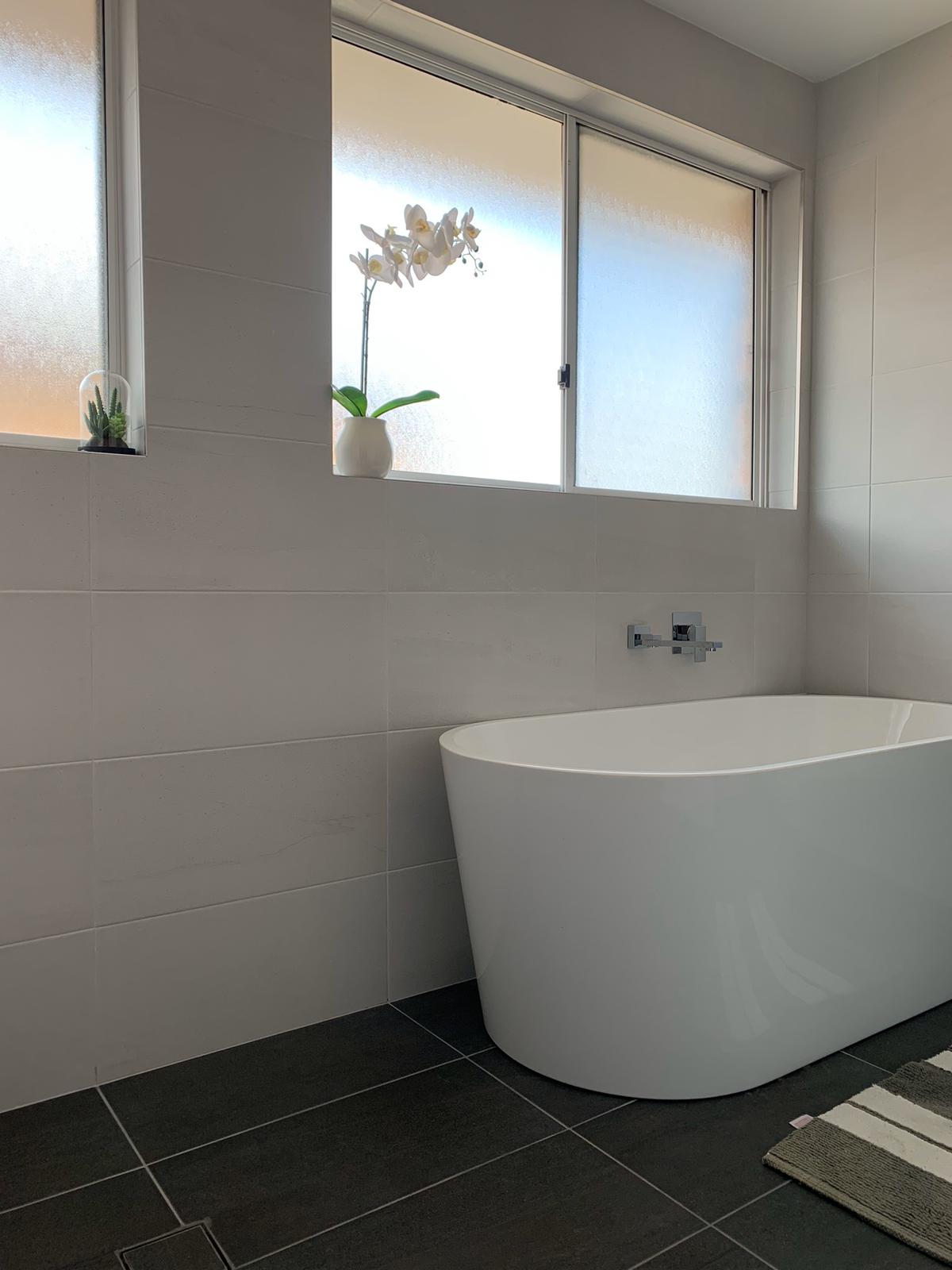
Walk-In Shower vs Bathtub: Full Comparison
| Factor | Walk-In Shower | Bathtub |
|---|---|---|
| Typical Water Use | ~63L for a 7-minute shower with a WELS-rated head | ~95–150L per fill |
| Space Required | Works well in compact bathrooms | Needs more floor area, particularly freestanding baths |
| Accessibility | Step-free entry, safer for mobility concerns and ageing in place | Requires stepping over the tub wall |
| Family Use | Less practical for bathing young children | Preferred by many families for bathing toddlers |
| Maintenance | Fewer corners and edges, generally easier to keep clean | More surface area and a tub wall to clean |
| Resale Consideration | Can suit buyers prioritising a modern, low-maintenance bathroom | Often still expected in at least one bathroom by family buyers |
Does Removing the Bathtub Hurt Resale Value?
Removing the only bathtub from a home can narrow its appeal to family buyers, since many households with young children specifically look for at least one bathtub when searching for a home. This matters more in a home with a single bathroom than in a home with two or more, where a walk-in shower in one bathroom and a bathtub retained in another avoids the trade-off entirely.
For a home with only one bathroom, keeping a bathtub, even a modest one, generally keeps the property appealing to the widest range of buyers. This comes up often in family-heavy suburbs like Maroubra, where retaining at least one bath is a common request even when the rest of the bathroom gets a full modern update. For homes with multiple bathrooms, converting one to a walk-in shower while keeping a bath elsewhere is usually the safer move if resale is a consideration.
Choosing Based on Household Type
If accessibility is the main driver behind the decision rather than family bathing needs or space, it's worth looking at our dedicated guide on disability and accessible bathroom renovations, which goes into more depth on grab rails, fall prevention and wider doorway requirements than this comparison covers. For everyone else, here's how three common household types tend to land on this decision.
| Factor | Scenario A: Family With Young Children | Scenario B: Couple or Single, No Children | Scenario C: Ageing in Place / Accessibility Focus |
|---|---|---|---|
| Recommended Fixture | Bathtub, or bath retained in at least one bathroom | Walk-in shower | Walk-in shower, ideally step-free |
| Reasoning | Bathing young children is easier and safer in a tub | Daily convenience and lower water use with a modern showerhead | Step-free entry reduces fall risk and supports long-term independence |
| Resale Consideration | Removing all baths can narrow buyer appeal | Lower impact if the home has another bathroom with a bath | Less relevant if the home is being renovated for long-term personal use |
How Much Space Does a Walk-In Shower Need Compared to a Bath?
A walk-in shower needs a minimum of around 900mm x 900mm to function properly, with 1000-1200mm width considered more comfortable for daily use. A standard bath typically needs 1500-1700mm in length and 700-750mm in width, meaningfully more floor area in one direction, though a bath's footprint is more predictable since it doesn't need the extra clearance a walk-in shower benefits from around its open side.
In a compact bathroom, this space difference often decides the question before water use or family needs even come into it, there simply may not be room for a bath without compromising everything else in the layout. This is especially relevant for apartment bathroom renovations, where floor space is tight and every centimetre matters more than it does in a typical house.
Is a Shower-Over-Bath a Reasonable Middle Ground?
A shower-over-bath, a standard bathtub with a showerhead mounted above it, remains a practical middle ground for households that can't commit fully to one option. It keeps the ability to bathe children or take a soak while still offering a quick shower option day to day, without needing the floor space for two separate fixtures.
The trade-off is that a shower-over-bath doesn't give the fully open, step-free feel of a genuine walk-in shower, and cleaning around the curtain or screen at the tub's edge takes more effort than a properly waterproofed open shower recess. It's a compromise, not the best version of either option, but a reasonable one where space or budget rules out having both separately.
Does a Walk-In Shower Need Its Own Waterproofing to Australian Standards?
Yes, every walk-in shower must be waterproofed to AS 3740, the same standard that applies to a bathtub's surrounding wet area, regardless of which option is chosen. Converting a bathtub to a walk-in shower typically means extending the waterproofed zone slightly further than a standard bath enclosure requires, since there's no tub wall containing water to one area.
Converting a bathtub to a walk-in shower typically involves removing the tub, extending the waterproofing to the new shower footprint, and often adjusting the floor fall toward a new drain point. This work generally falls within the standard cost of a bathroom renovation rather than being priced separately, though the exact figure depends on the size of the space and whether any plumbing needs to move as part of the conversion.
No, and these two terms are commonly mixed up in search. A walk-in shower is a step-free shower recess with no tub at all. A walk-in tub is a specific bathtub product with a small door built into the side, mainly used in aged-care settings, and it's not something commonly installed in Australian bathroom renovations. If you searched for one and meant the other, a walk-in shower is almost certainly what you're after.
A short shower with a water-efficient, WELS-rated showerhead uses less water than a bath. A long shower with an older, non-rated showerhead can use more water than a full bath, so the showerhead's efficiency rating matters as much as the choice between shower and bath.
It can, particularly in a home with only one bathroom, since many family buyers specifically look for at least one bathtub. In a home with multiple bathrooms, keeping a bath in at least one of them while converting another to a walk-in shower generally avoids this concern.
Yes, if the floor space allows it, a separate bath and walk-in shower in the same bathroom is achievable and gives the flexibility of both options. Where space is limited, a shower-over-bath configuration is a common compromise, though it doesn't offer the fully open, step-free feel of a genuine walk-in shower.
A walk-in shower generally has fewer corners and edges than a bathtub with a surround, which makes it easier to keep clean day to day. A bathtub has more surface area to clean and a tub wall that can collect grime over time if not maintained regularly.
Weighing up a walk-in shower or a bathtub for your next renovation? As Sydney bathroom renovation specialists with 15+ years across the city, get a free, itemised quote from Aussie Bathroom Renovations and we'll help you work out what suits your household and your floor plan.
GET IN TOUCH
Talk to our friendly bathroom experts today about your Sydney bathroom renovation.
GET IN TOUCH
Talk to our friendly bathroom experts today about your Sydney bathroom renovation.
Builder's License: 387501C
© Aussie Bathroom Renovations 24 649 359 982. All Rights Reserved. Website by Primomedia.